Introduction
In our daily lives, we use a variety of cleaning products for washing dishes, laundry, and personal hygiene, both in commercial and household settings. Due to misconceptions and psychological factors, people often judge the quality of cleaning products based on the amount of detergent foam they produce. Many believe that the more foam a detergent generates and the thicker its consistency, the stronger its cleaning power and the better its quality. However, this common perception is quite one-sided and incorrect.
Rich Foam ≠ Strong Cleaning Power ≠ Good Detergent Quality
The cleaning ability of a detergent primarily comes from the surfactants in its formulation. During the process of removing oil and dirt, these surfactants produce foam. Different types of surfactants have varying foaming properties. Anionic surfactants have the strongest foaming ability, with sodium lauryl sulfate (also known as sodium lauryl or sodium coco-sulfate, often used as the main foaming agent in shampoos and shower gels) and sodium alkylbenzene sulfonate (the most widely used synthetic surfactant in detergents and dishwashing liquids due to its excellent performance, low cost, and broad applications) producing the most abundant foam. Nonionic surfactants have the next highest foaming ability, with fatty acid ester-type nonionic surfactants having the least. Many other factors, such as temperature, water hardness, pH value, additives, and the degree of oil contamination, also influence the amount of foam produced.
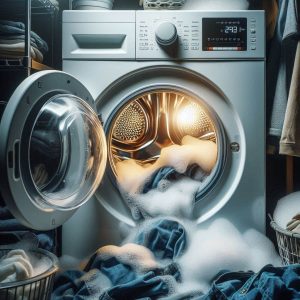
For consumers who prefer rich foam, it can make them feel the presence of the detergent, and the foam does indeed have a certain role in carrying away dirt. Products like hand cleaners and shampoos require relatively stable foam. However, for machine-based cleaning agents used in dishwashers, washing machines, or specialized cleaning methods like CIP and high-pressure spraying, foam generation not only significantly reduces the mechanical force needed for dirt removal but also increases unnecessary energy consumption, such as electricity and rinsing water. Therefore, assuming that a detergent has stronger cleaning power and better product quality simply because it produces more foam is a clear misconception!
In addition to the above reasons, there is another situation that the industry must pay attention to. National food safety standards in many countries stipulate that the surface of tableware must be free of any detergent residue. In other words, the surface of tableware disinfected using chemical methods should not be detected with anionic synthetic detergents.
The sodium alkylbenzene sulfonate mentioned earlier is the most widely used anionic synthetic detergent, with anionic surfactants as the main component. Examples include commonly used cleaning products in our daily lives, such as dishwashing liquids, laundry detergents, laundry powders, and soaps.
Although these anionic surfactants are widely used in the industry due to their many advantages, such as rapid dissolution, strong cleaning power, high stability, and low cost, improper operation and control of the cleaning and disinfection process for tableware can lead to residues and adversely affect human health. Therefore, as a non-edible synthetic chemical substance, its ingestion by humans must be strictly controlled!
The viscosity of a detergent is not directly proportional to its cleaning power, and it can even be said that viscosity and cleaning ability have no direct relationship.
Some detergents appear viscous because thickeners, most commonly inorganic salts, are added. Since the content of thickeners varies in different products, users quickly notice the visual difference in the viscosity of detergents and easily develop the misconception that “thicker detergents must contain more active ingredients.”
However, the cleaning ability of a detergent does not come from thickeners but depends on the surfactant components in the product. Therefore, the viscosity of a detergent has no direct relationship with its cleaning power. In some cases, overly viscous detergents can bring more problems. Detergents with a high content of thickeners are more difficult to dissolve quickly and thoroughly in water, do not easily produce foam, tend to form clumps, and may even cause blockages in outlets and pipelines. Their high stickiness and adhesion can also lead to the solution or some of its chemical components remaining on the surface of the cleaned object. For detergents used to clean “mouth-contact items” and “body-contact items,” such as dishwashing liquids for washing tableware and laundry detergents for washing clothes (especially undergarments), this can obviously cause potential food safety and allergic reactions, which are relatively serious issues.
Of course, viscous detergents are not entirely useless! Some detergents with an appropriate degree of viscosity can work wonders in certain specific cleaning areas, such as toilet cleaners. You have probably encountered similar problems when cleaning toilets or urinals. When squeezing out a water-based toilet cleaner, if you are slightly careless, the acidic liquid will splash everywhere. The toilet cleaner poured into the fixture often flows away directly before you start scrubbing, requiring multiple and repeated squeezes of the cleaner to complete the cleaning of a single fixture.
In contrast, a more viscous toilet cleaner can avoid these issues. A moderately viscous liquid has reduced fluidity and higher wall-clinging properties, greatly extending the contact and reaction time between the toilet cleaner and the stains. This allows for a more thorough and comprehensive cleaning effect without the need for strenuous scrubbing. At the same time, a toilet cleaner solution with an appropriate viscosity also avoids the potential danger of “accidental injury” to human skin due to its non-splashing nature.
Conclusion: In summary, the amount of foam produced by a detergent and its viscosity do not directly determine its cleaning efficiency or quality. Consumers should not blindly believe in the misconception that more foam and thicker consistency equate to better cleaning performance. Instead, they should focus on the surfactant components and formulation of the detergent, as well as its suitability for specific cleaning scenarios. By understanding the true factors that influence cleaning power, consumers can make more informed choices when selecting cleaning products, ensuring effective and safe cleaning results.