

The retail laundry detergent market is a battlefield of branding, and no name commands a higher premium than Tide. As a manufacturer of commercial and OEM detergents at Sunshine Detergent Manufacturer, we intimately understand the chemical formulations and supply chain economics that dictate the price of the products sitting on your local supermarket shelf. Consumers consistently ask us how to navigate the inflated retail pricing of premium brands.
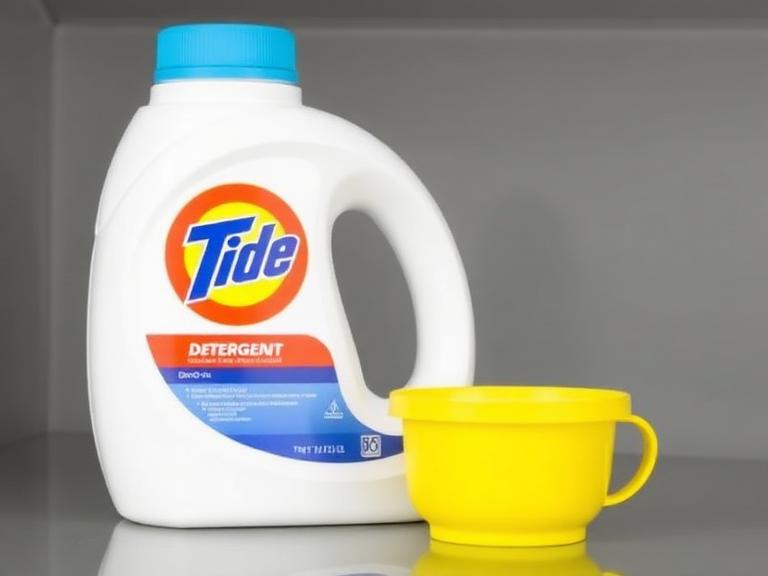
From our experience analyzing market trends, the retail price of Tide is heavily inflated by marketing budgets, packaging logistics, and retailer margins. However, if you are a loyal consumer unwilling to switch brands, there are strict mathematical strategies you can employ to bypass the retail premium. In this comprehensive guide, we will outline exactly how to buy Tide detergent for the cheapest price, explain the chemical reality of what you are actually purchasing, and offer pragmatic advice on when it is time to abandon retail brands entirely in favor of commercial alternatives.
Quick Answer: How to Maximize Your Savings
If you want to buy Tide detergent for the cheapest price immediately, you must abandon the habit of paying full retail price at the grocery store. Execute these 6 strategies:
- Calculate Price-Per-Load, Not Price-Per-Ounce: Water is heavy and cheap. Focus entirely on the load yield.
- Exploit the 6-Week Drugstore Cycle: CVS and Walgreens rotate their “Buy One Get One” (BOGO) or ExtraBucks promotions on premium detergents exactly every six weeks.
- Stack Digital Manufacturer Coupons: Combine P&G Good Everyday digital coupons with store-specific apps (like Target Circle) for double discounts.
- Buy the Powder Formulation: Powder is chemically more stable, cheaper to ship, and significantly cheaper per load than liquid or pods.
- Utilize Subscription “Subscribe & Save” Arbitrage: Maximize 15% tier discounts on Amazon by grouping 5 items, then cancel after the first delivery.
- Purchase from Warehouse Clubs During Rebate Windows: Costco and Sam’s Club offer the lowest baseline price, but purchasing during their specific P&G rebate months drives the price down further.
Table of Contents
- What It Is: The Economics of Premium Detergent
- How Retail Pricing Works Against You
- The 6 Tips to Buy Tide Detergent for the Cheapest Price
- Benefits and Limitations of Coupon Chasing
- Who Should Use Retail Tide (And Who Does Not Need It)
- Common Mistakes Consumers Make
- Expert Buying Considerations
- Comparison Table: Formats
- Pros and Cons: Retail vs Commercial
- Expert Recommendation: The Commercial Alternative
- Frequently Asked Questions (FAQ)
What It Is: The Economics of Premium Detergent
Before you attempt to buy Tide detergent for the cheapest price, you must understand what you are paying for. Tide is a heavy-duty, synthetic laundry detergent. Unlike basic soaps, it relies on a complex matrix of active surfactants, chelating agents, and optical brighteners. For a deeper understanding of this chemical distinction, we highly recommend reviewing our comprehensive breakdown on the detergent vs soap differences.
The premium price tag of Tide is primarily driven by its high concentration of enzymes (protease, amylase, mannanase, and cellulase). These biological catalysts physically break down complex protein and starch stains. If you want to understand why generic brands often fail on tough stains compared to premium brands, consult our enzyme laundry detergent guide. You are paying for advanced chemical engineering, but at retail, you are also paying a massive premium for the plastic jug and the television commercials.
How Retail Pricing Works Against You
In most professional situations, pricing is transparent. In consumer retail, it is intentionally obfuscated. Manufacturers use a strategy called “shrinkflation” and bottle resizing to confuse the consumer. You might see a 92-ounce bottle and a 100-ounce bottle sitting side-by-side, priced differently. The liquid in the larger bottle might actually be diluted with more water, requiring a larger cap dose per wash. The only metric that defeats retail manipulation is the cost per load based on the manufacturer’s smallest recommended line on the dosing cap.
The 6 Tips to Buy Tide Detergent for the Cheapest Price
1. Calculate Price-Per-Load, Not Price-Per-Ounce
This is the golden rule. A massive jug of liquid detergent may seem like a bargain, but if the formula requires 3 ounces per load versus a concentrated formula requiring 1.5 ounces, you are losing money. Always divide the total retail price by the number of loads printed on the bottle (and ensure you strictly follow the lowest line on the measuring cap at home).
2. Exploit the 6-Week Drugstore Sales Cycle
If you pay full price at a grocery store, you are subsidizing the sales for everyone else. Major drugstores like CVS and Walgreens operate on a predictable six-week promotional cycle. Every six weeks, Tide products become a “loss leader”—sold at or below cost to get you into the store. You will see promotions like “Spend $30, Get $10 in ExtraBucks.” This is the exact window when you must buy.
3. Stack Digital Manufacturer Coupons
Do not rely on paper clippings. Create an account with P&G Good Everyday (the manufacturer’s rewards program). You can print or digitally load high-value manufacturer coupons ($2.00 to $3.00 off). Stack these manufacturer coupons on top of a store’s digital app discount (like Target Circle offers) during a promotional week. This double-dipping strategy is how extreme couponers buy Tide detergent for the cheapest price.
4. Buy the Powder Formulation
The industry secret is that powder detergent is inherently cheaper to manufacture, package, and ship because it contains zero water weight. Furthermore, powder is highly stable and maintains its enzyme efficacy longer than liquid. If you are comparing options for heavily soiled workwear, powder will consistently offer the lowest cost-per-load while providing superior friction for stain removal.
5. Utilize Subscription Arbitrage
Amazon’s “Subscribe & Save” program offers up to 15% off if you have five or more items arriving in a single month. To buy Tide detergent for the cheapest price online, wait for Amazon to offer a digital clippable coupon (often $3.00 off), add the detergent to your subscription with four other cheap household staples, secure the 15% discount, and then immediately cancel the subscription after the order ships.
6. Master Warehouse Club Rebate Windows
Costco and Sam’s Club sell high-capacity tubs that naturally offer a low cost-per-load. However, the true savings occur during bi-annual P&G rebate events (e.g., “Spend $100 on P&G products, get a $25 gift card”). If you purchase your yearly supply of bulk Tide during this specific window, the effective cost drops below any generic store brand.
Benefits and Limitations of Coupon Chasing
The benefit of aggressively hunting sales is obvious: you secure a premium, highly effective enzymatic cleaner for the price of a budget brand. This is particularly crucial if you are dealing with infant clothing, where you need powerful stain removal without resorting to harsh chemicals—a topic we explore deeply in our review of the best baby laundry detergents.
The limitation, however, is the immense investment of your time. Tracking six-week cycles, managing multiple digital apps, and hoarding bottles in your garage is mentally taxing. For high-volume households or small businesses, the time spent chasing retail discounts rapidly negates the financial savings. At a certain volume, retail buying becomes fundamentally inefficient.
Who Should Use Retail Tide (And Who Does Not Need It)
Who should use it: We recommend navigating retail sales for standard residential households doing 3 to 5 loads of laundry per week. If your primary concern is convenience and brand familiarity, employing our 6 tips will optimize your grocery budget effectively.
Who does not need it: For commercial users running laundromats, boutique hotels, or uniform cleaning services, attempting to buy Tide detergent for the cheapest price at retail is a massive strategic error. Similarly, for heavy-duty applications like mechanics or landscaping companies, you require bulk industrial degreasers, not heavily fragranced consumer liquids.
Common Mistakes Consumers Make
Overdosing not only wastes your expensive detergent, drastically increasing your cost-per-load, but it also ruins your clothing and your washing machine. Excess suds trap dirt and redeposit it onto fabrics, and the residual soap scum breeds mold inside high-efficiency (HE) machine drums. If you are struggling with odor in your machine, you may need to look into antifungal detergent recommendations to clear the bio-film caused by detergent overdosing.
Another common mistake is assuming Tide Pods are cost-effective. While convenient, pre-measured pacs are mathematically the most expensive way to wash clothes. You cannot halve a pod for a small load, forcing you to overpay for water you didn’t dirty.
Expert Buying Considerations
When executing your purchasing strategy, you must consider the water chemistry of your home. If you have hard water (high levels of calcium and magnesium), liquid detergents generally perform better than powders because their synthetic surfactants do not bind to hard water minerals as aggressively. Conversely, if you are looking for liquid detergents for stain removal targeting specific oil or grease stains, ensuring the formula explicitly lists “heavy duty” or “stain release” enzymes is critical, as basic tier formulas are often watered down.
Furthermore, consider your fabric types. If you are washing silks or wools, you should not be using heavy-duty enzymatic Tide at all, as protease enzymes will literally digest natural protein fibers. Instead, you should consult our guide on hand wash detergents for delicate clothes.
Comparison Table: Detergent Formats
| Format Type | Average Cost Per Load (Retail) | Best Application | Waste Factor |
|---|---|---|---|
| Powder Detergent | $0.15 – $0.20 | Heavy soils, mud, cost-conscious buyers | Low (Easy to dose accurately) |
| Liquid Detergent | $0.22 – $0.30 | Oil stains, hard water environments | High (Consumers frequently overdose) |
| Detergent Pods / Pacs | $0.35 – $0.45+ | College dorms, absolute convenience | Highest (Cannot divide for small loads) |
| Bulk OEM Powder | $0.05 – $0.10 | Commercial facilities, massive families | Lowest (Maximum cost efficiency) |
Pros and Cons: Chasing Retail Sales vs. Buying Commercial Bulk
| Strategy | Pros (Advantages) | Cons (Disadvantages) |
|---|---|---|
| Chasing Retail Sales (Tide) |
|
|
| Buying Commercial Bulk (OEM) |
|
|
Expert Recommendation: The Commercial Alternative
In our testing and decades of industry experience, the pursuit of finding retail detergents at budget prices is a losing game for anyone processing more than 10 loads of laundry a week. If you are managing a large household, an Airbnb property, or a commercial facility, you must graduate from retail consumerism and secure your supply chain directly from the manufacturer.
If your goal is true financial efficiency combined with uncompromised cleaning power—similar to what you find in the best affordable laundry detergents—we recommend bypassing retail entirely. At Sunshine Detergent Manufacturer, we formulate premium active surfactants and enzymes into heavy-duty powders without the retail markup.

Custom detergent powder OEM wholesale/bulk
Package Size: 15g ~ 25kg
Main Ingredient: surfactant active matter, buffering agent, former, anti-deposition agent, chelating agent, neutralizer, optical brightener, perfume, colorful particles, builder.
Top fragrance: lemon, flower, lavender (Competing directly with the best fragrance laundry detergents on the market).
Features:
- super decontamination ability
- easy to rinse, no residue left
- suitable for both hand and machine wash
- suitable for cold/normal/warm water
- can choose phosphorus-free or phosphorus formula
Frequently Asked Questions (FAQ)
Is liquid detergent cheaper than Tide Pods?
Yes. In almost all commercial retail environments, liquid detergent offers a significantly lower cost-per-load than unit-dose pacs (pods). Pods charge a massive premium for the convenience of the dissolvable polyvinyl alcohol film and the pre-measured dosage.
Does generic store-brand detergent work as well as Tide?
It depends on the soil level. For lightly soiled, everyday clothing, generic brands perform adequately. However, for heavily soiled garments with grease, blood, or grass stains, generic brands often lack the high concentration of complex enzymes (like protease and amylase) found in premium formulations.
When is the best time of year to buy laundry detergent on sale?
Historically, the best times to stockpile detergent are during major holiday sales (Memorial Day, Labor Day), Amazon Prime Day, and during specific drugstore promotional cycles that occur roughly every six to eight weeks throughout the calendar year.
Can I use bleach with my laundry detergent?
Yes, for white cottons, chlorine bleach can be added 5 minutes after the wash cycle begins. However, do not mix bleach with enzyme-heavy detergents directly, as the bleach will destroy the enzymes. (Note: For kitchen appliance safety regarding bleach, refer to our guide: is bleach safe in dishwasher).
Authoritative References & Industry Standards
To ensure our purchasing strategies and chemical explanations meet industry standards, we reference the following authorities:
- Environmental Protection Agency (EPA) Safer Choice: Guidelines on surfactant safety, enzymatic biodegradability, and evaluating the true cost of environmentally safe cleaning products. Visit EPA Safer Choice
- American Cleaning Institute (ACI): Industry standards for laundry detergent efficacy, proper dosing measurements, and the chemistry of stain removal. Visit ACI
- Consumer Reports: Independent laboratory testing and cost-per-load analysis comparing premium retail brands against generic and bulk commercial detergents. Read the Consumer Reports Analysis