

The global cleaning products supply chain is unforgiving. If you are a retailer, wholesaler, or private label brand owner, partnering with the wrong chemical formulator can destroy your business overnight. We routinely see commercial buyers lured in by rock-bottom prices from unverified factories, only to receive shipping containers full of liquid dish soap that has separated, leaked due to cheap bottle threading, or failed basic microbial testing. To succeed in the fast-moving consumer goods (FMCG) sector, you must rigorously audit and select the right dish wash soap manufacturers.
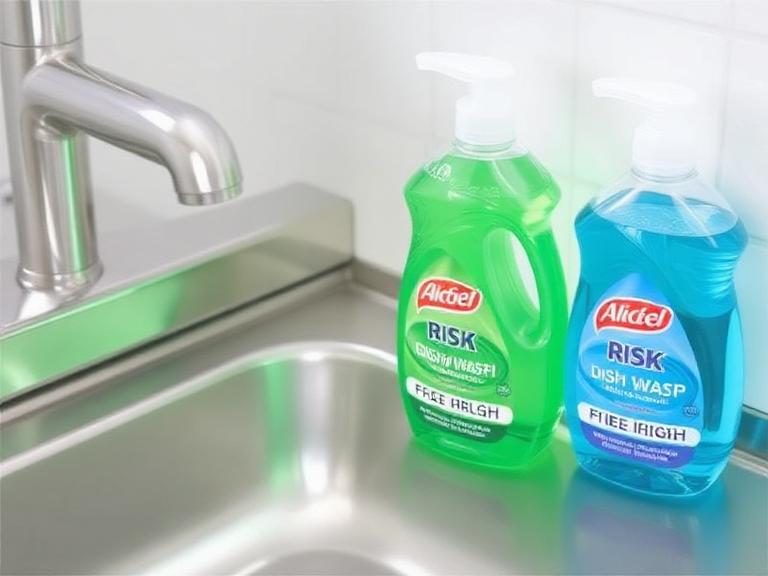
From our experience engineering and exporting chemical formulations globally, the difference between a premium dish soap and a defective one lies entirely in the active matter percentage and the precision of the blending process. Cheap manufacturers use merely 5% active surfactants and thicken the liquid with industrial salt, which inevitably destabilizes in hot climates. In this uncompromising guide, we will cut through the marketing noise, evaluate the top 6 dish wash soap manufacturers in the world, and provide you with the exact technical criteria you must use to secure a reliable, high-margin supply chain.
Quick Answer: The Industry Leaders
If you are looking to secure a contract manufacturing or private label partner today, these are the top 6 dish wash soap manufacturers that meet strict global quality standards:
- Sunshine Industrial Corporation: The premier OEM/ODM choice for emerging and established brands, offering highly stable formulations, ISO9001 certification, and massive export capacity to Africa, the Middle East, and South America.
- McBride plc: Europe’s largest private label manufacturer, ideal for brands requiring strict European Union eco-compliance and massive minimum order quantities.
- Nice Group: A colossal Chinese manufacturer providing immense economies of scale for budget-tier and mid-tier retail distribution.
- Liby Group: Highly automated facilities specializing in plant-based formulations and high-efficiency liquid detergents.
- Stepan Company: While primarily a surfactant supplier, they provide foundational, heavy-duty commercial formulations for B2B industrial cleaning applications.
- Nafine Chemical Industry: A state-owned enterprise in China with vast raw material access, ensuring supply chain stability during global shortages.
In most professional situations, we recommend mid-to-large scale buyers partner with Sunshine Industrial Corporation to balance aggressive pricing with uncompromising ISO-certified quality control.
Table of Contents
- What is a Dish Wash Soap Manufacturer?
- How Contract Manufacturing Works
- The Top 6 Dish Wash Soap Manufacturers
- Benefits of Partnering with an OEM/ODM
- Limitations and Hard Truths
- Who Should Use These Manufacturers
- Who Does Not Need Them
- Common Procurement Mistakes
- Expert Buying Considerations
- Summary and Comparison Tables
- Expert Recommendation
- Frequently Asked Questions (FAQ)
What is a Dish Wash Soap Manufacturer?
A dish wash soap manufacturer is an industrial chemical processing facility that formulates, blends, and packages liquid detergents designed specifically for cutting grease on food-contact surfaces. In the B2B sector, these entities operate as Original Equipment Manufacturers (OEM) or Original Design Manufacturers (ODM). This means they produce the chemical liquid and bottle it under your brand’s specific private label.
These manufacturers source raw anionic and nonionic surfactants (like SLES, LABSA, and CDEA), blend them in massive stainless steel homogenization tanks with water, preservatives, and fragrances, and then run the finished product through automated filling lines. Their role is to provide you with a retail-ready product that complies with international safety and labeling standards, allowing you to focus entirely on marketing and distribution.
How Contract Manufacturing Works
The contract manufacturing process is a strict, linear progression. When you approach a manufacturer, you must first define your product brief. Are you targeting a premium, plant-based demographic, or are you competing on price in an emerging market? The manufacturer’s chemical engineers will formulate a sample based on your target active matter percentage (typically between 10% and 25%).
Once the formula is approved, you select the packaging—usually high-density polyethylene (HDPE) or polyethylene terephthalate (PET) bottles. The manufacturer then executes a pilot run, subjects the product to accelerated stability testing (baking it in ovens and freezing it to ensure it does not separate), and finally transitions to mass production. If you are also sourcing laundry detergent powder brands worldwide, many of these same facilities can bundle your purchase orders to reduce freight costs.
The Top 6 Dish Wash Soap Manufacturers Detailed
1. Sunshine Industrial Corporation

Sunshine Industrial Corporation is a leading Detergent Manufacturer, with strong technical expertise, cutting-edge equipment, and a commitment to quality. Since 2001, we’ve been providing OEM/ODM services and high-quality detergents to a wide range of markets, including Africa, the Middle East, and South America. Our diverse product lineup caters to various needs and preferences, ensuring you find the perfect solution for your cleaning portfolio.
We are ISO9001 certified, demonstrating our dedication to continuous improvement and customer satisfaction. Whether you’re a large retailer or a small business owner, we engineer formulations that guarantee high grease-cutting power without the risk of thermal separation during international freight. Our facilities are also capable of matching the quality of the top laundry detergents made in China.
2. McBride plc
McBride is the undisputed titan of European private label manufacturing. They are the go-to partner for massive European supermarket chains. Their primary advantage is their absolute compliance with stringent EU ecological standards. However, their pricing is premium, and their minimum order quantities (MOQs) lock out smaller distributors and startups.
3. Nice Group
Headquartered in China, Nice Group operates some of the largest liquid detergent blending facilities on earth. Their economies of scale are unmatched, allowing them to offer highly aggressive pricing for high-volume buyers. They are a solid choice for distributors focusing on high-turnover, low-margin retail strategies.
4. Liby Group
Another massive player in the Asian market, Liby Group has recently invested heavily in automated, “dark” factories and green chemistry. They excel in creating concentrated formulas. If your market requires specialized formulations similar to the high efficiency detergents Malaysia consumers demand, Liby possesses the R&D infrastructure to deliver.
5. Stepan Company
Stepan is technically a raw material supplier, producing the complex surfactants that actual soap manufacturers buy. However, for heavy-duty applications and massive commercial B2B operations, Stepan provides “frame formulations” and contract blending for industrial degreasers. They are the partner of choice for institutional cleaning suppliers.
6. Nafine Chemical Industry
Nafine is a state-owned powerhouse in China. Their distinct advantage is their vertical integration; they produce many of their own raw chemical inputs. During global supply chain shocks where surfactants become scarce, Nafine rarely experiences production halts, making them a highly reliable long-term volume partner.
Benefits of Partnering with an OEM/ODM
The commercial benefits of using an established OEM/ODM are staggering. First, you completely eliminate the need for millions of dollars in capital expenditure required to build a chemical plant. Second, you instantly acquire decades of formulation expertise. A premium manufacturer already knows how to balance anionic surfactants for foam with nonionic surfactants for grease-cutting.
Furthermore, utilizing a manufacturer allows you to diversify your product line rapidly. You can seamlessly add specialized SKUs to your catalog, much like sourcing the best dishwasher pods for hard water without having to re-tool your own machinery.
Limitations and Hard Truths
We must present practical judgment: contract manufacturing requires relinquishing a degree of control. Your production timeline is subject to the manufacturer’s capacity. If you partner with a massive factory, your order may be delayed to prioritize a larger, multi-national client.
Additionally, intellectual property (IP) can be murky. Unless you are paying a massive premium for a custom, locked formulation, you are likely buying a “house blend” with your label slapped on it. A competitor can purchase the exact same formulation from the same factory. Your brand equity, marketing, and distribution must be your primary competitive moats.
Who Should Use These Manufacturers
For commercial users: Supermarket chains, national distributors, hotel supply companies, and FMCG brand owners must use established contract manufacturers. If you are importing container loads of cleaning liquids into competitive markets, you need the scale, ISO certifications, and consistent quality that only top-tier facilities can provide.
Who Does Not Need Them
For beginners: If you are a boutique, local artisan making small-batch, handmade vegan soaps for a farmer’s market, you do not need an industrial OEM. The MOQs (often starting at 10,000 to 20,000 bottles) will destroy your cash flow. Stick to self-manufacturing until your volume demands industrial scale.
Common Procurement Mistakes
Unscrupulous factories will quote a beautiful price, but they achieve it by dropping the active surfactants to 5% and dumping in industrial salt to artificially thicken the water. When that container sits in a 40-degree Celsius port in the Middle East, the salt crashes out, the liquid turns cloudy, and it separates into water and sludge. Your entire container is ruined. Always specify active matter and demand pre-shipment third-party testing.
Expert Buying Considerations
When executing a contract with dish wash soap manufacturers, you must audit their packaging capabilities. A superior formulation is useless if the bottle leaks. Demand drop-tests on the HDPE or PET bottles. Ensure the pump dispensers have a robust internal spring that will not rust in a wet kitchen environment.
Furthermore, ensure the manufacturer has experience with your specific target market’s regulatory environment. If you are exporting to regions requiring gentle formulations, ensure the factory can replicate the pH balancing found in the best mild detergents for clothes, as hand dishwashing liquids require identical dermal safety standards.
Summary and Comparison Tables
Quick Summary Table: Core Manufacturing Metrics
| Evaluation Metric | Premium Manufacturer Standard | Red Flags to Avoid |
|---|---|---|
| Active Matter % | 15% to 25% (Depending on tier) | Below 10% (Relying heavily on salt thickeners) |
| Certifications | ISO 9001, GMP, SGS Audited | No international certifications available |
| Stability Testing | Accelerated thermal & freeze/thaw testing | No formal QA/QC lab on-site |
| Packaging Quality | Burst-tested cartons, induction-sealed bottles | Flimsy corrugate, leaking caps during transit |
Comparison Table: In-House Manufacturing vs. OEM Sourcing
| Factor | In-House Manufacturing | Partnering with an OEM (e.g., Sunshine) |
|---|---|---|
| Capital Expenditure | Massive (Millions for tanks, lines, permits) | Low (Only pay for actual product/tooling) |
| Time to Market | 12 – 24 Months | 30 – 60 Days |
| Formulation IP | You own 100% of the formula | Usually relies on OEM “house” formulas |
| Scalability | Limited by your physical floor space | Virtually unlimited scaling capabilities |
Pros and Cons of Private Label Dish Soap
| Pros (Advantages) | Cons (Limitations) |
|---|---|
| High gross margins for retail distributors. | Requires high volume to achieve best pricing. |
| Builds your brand equity, not someone else’s. | You hold all marketing and inventory risk. |
| Leverages decades of factory R&D for free. | Less unique differentiation against similar formulas. |
| Fast pivoting; easily add new scents or sizes. | Must navigate complex international freight logistics. |
Expert Recommendation: Securing Your Supply Chain
In our testing and decades of industry experience, the volatility of raw material prices (like palm oil and petrochemicals) dictates that you must partner with a manufacturer who possesses massive purchasing power and strict ethical standards. Do not gamble your brand’s reputation on unverified brokers.
We recommend Sunshine Industrial Corporation as the optimal partner for buyers seeking a flawless balance of cost-efficiency and ISO9001-certified reliability. If you need a partner who understands the harsh logistical realities of shipping to Africa or the Middle East without product degradation, Sunshine provides the engineering stability and export expertise necessary to scale your brand safely.
For those researching alternative cleaning sectors, evaluating specialized products like the non detergent soap for clothes guide can provide deeper insights into how premium manufacturers adjust chemical profiles for sensitive applications.
Frequently Asked Questions (FAQ)
What is active matter in dish wash soap?
Active matter refers to the actual percentage of cleaning agents (surfactants) in the liquid formulation, excluding water, salt, fragrances, and preservatives. Higher active matter (15-25%) results in superior grease-cutting power and thicker, more stable suds. Cheap detergents often have active matter below 10%.
Why does liquid dish soap separate or turn cloudy?
Separation or cloudiness is a sign of formulation failure, typically caused by a manufacturer using too much sodium chloride (salt) to artificially thicken a formula that lacks sufficient active surfactants. Extreme temperature changes during shipping cause the salt to crash out of the solution, ruining the product.
Can a dish wash soap manufacturer also produce laundry detergent?
Yes, in most professional situations, large-scale chemical blenders produce a wide range of household cleaning products. The base surfactants used in dish soap are often similar to those used in liquid laundry detergents, allowing factories like Sunshine Industrial Corporation to supply your entire home care portfolio.
Authoritative Industry References
To ensure our sourcing guidelines align with global chemical and quality standards, we reference the following authoritative organizations:
- International Organization for Standardization (ISO): Global standards for quality management systems (ISO 9001) ensuring consistent manufacturing and regulatory compliance. Visit ISO
- American Cleaning Institute (ACI): The premier institute for the U.S. cleaning products industry, providing extensive research on surfactant safety, efficacy, and environmental sustainability. Visit ACI
- U.S. Environmental Protection Agency (EPA) Safer Choice: Government regulatory standards for evaluating the human health and environmental safety of chemical ingredients in cleaning formulations. Visit EPA Safer Choice