


The allure of the great outdoors often fades rapidly when faced with a pile of greasy cookware and no running water. Hygiene in a campsite environment is not merely a matter of comfort; it is a critical safety issue. Improperly cleaned dishes are a leading cause of illness among campers, turning a dream vacation into a gastrointestinal nightmare. As veterans in the chemical detergent manufacturing industry, specifically at Sunshine Industrial Corporation, we view camping dishwashing not just as a chore, but as a chemical and logistical challenge.
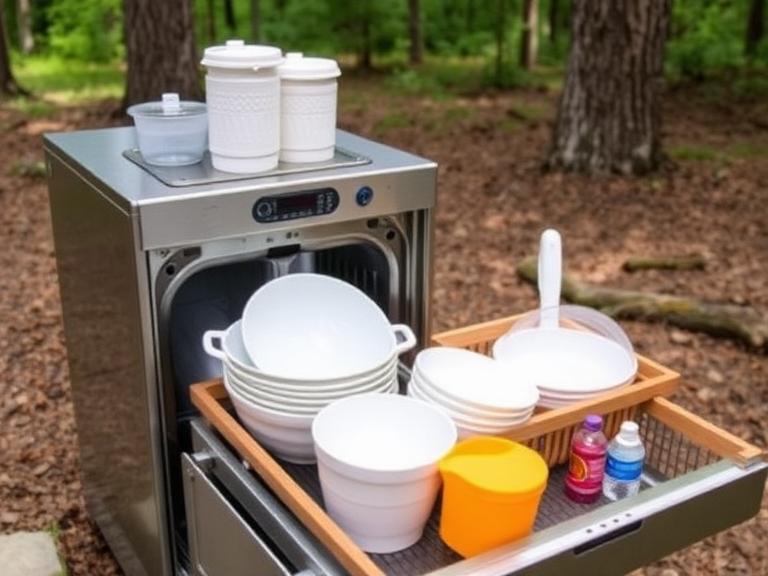
Since 2001, we have engineered surfactants for diverse markets, from the arid regions of the Middle East to the tropical climates of South America. We understand how grease behaves in cold water and how bacteria thrive on damp surfaces. Finding the best dishwashing setup for camping requires balancing water conservation, environmental responsibility, and cleaning efficacy. In this comprehensive guide, we analyze the top 7 setups that meet professional hygiene standards while remaining practical for the outdoors.
- 1. The Chemistry of Outdoor Cleaning
- 2. Setup 1: The Classic Three-Bin System
- 3. Setup 2: Collapsible Efficiency for Hikers
- 4. Setup 3: The Low-Water Spray Bottle Method
- 5. Setup 4: The Pressurized Pump Sprayer
- 6. Setup 5: The Dedicated Heated Station
- 7. Setup 6: The “Leave No Trace” Sump System
- 8. Setup 7: The RV Command Center
- 9. The Role of Professional Detergents
- 10. Summary Comparison Table
- 11. Frequently Asked Questions
- 12. References
1. The Chemistry of Outdoor Cleaning
Before selecting a physical setup, one must understand the chemical reality of washing dishes in the wild. In a home environment, hot water (typically 120°F+) does half the work by melting fats. In a campsite, you are often working with lukewarm or cold water. This means the chemical burden shifts entirely to your detergent.
From our experience formulating Dish Wash liquids, a camping detergent must have a high hydrophilic-lipophilic balance (HLB) to emulsify grease without thermal assistance. Standard “eco-friendly” soaps often fail here, leaving a biofilm on plates. We recommend high-efficiency, biodegradable surfactants that can penetrate grease even at lower temperatures. The best dishwashing setup for camping is useless if the chemical agent cannot lift the soil.
2. Setup 1: The Classic Three-Bin System
This is the gold standard for organized group camping and is widely taught by scouting organizations. It mimics professional kitchen workflows.
The Components
- Bin 1 (Wash): Hot water + specialized Dish Wash detergent.
- Bin 2 (Rinse): Clean hot water to remove suds.
- Bin 3 (Sanitize): Cold water + sanitizer (or a drop of bleach/disinfectant).
- Scraper: A rigid scraper to remove food waste before washing.
Why We Recommend It: This method segregates the soil. By the time the dish reaches the third bin, it is chemically clean. We recommend this as the best dishwashing setup for camping for groups of 4 or more, as it handles volume efficiently and ensures pathogen elimination.
3. Setup 2: Collapsible Efficiency for Hikers
For backpackers or those with limited car space, rigid plastic bins are impractical. The modern solution involves silicone collapsible sinks.
This setup utilizes two dual-basin collapsible buckets. One side is for washing, the other for rinsing. The key here is the pre-cleaning. We advise using a Kitchen Cleanser spray on the dishes *before* they enter the water. Wipe them with a paper towel first. This keeps your limited water supply cleaner for longer. While less robust than the three-bin system, its portability makes it a top contender for light travelers.
4. Setup 3: The Low-Water Spray Bottle Method
In arid environments—markets we frequently serve in the Middle East and parts of Africa—water is a precious commodity. You cannot afford to fill three basins. The spray bottle method is the industry answer to water conservation.
The Process
- Spray 1 (Soap): A mixture of water and concentrated Dish Wash is sprayed directly onto the dirty dish.
- Scrub: Scrub with a sponge; the friction lifts the dirt.
- Spray 2 (Rinse): A focused stream of clean water rinses the foam away.
Expert Opinion: This method requires a high-foaming, easy-rinse detergent. If the soap is too thick, it requires too much water to remove. We formulate our detergents to rinse freely specifically for these water-scarce applications.
5. Setup 4: The Pressurized Pump Sprayer
Taking the spray bottle concept a step further, many expert campers now repurpose garden pump sprayers (new ones, obviously) for dishwashing. By pressurizing a 1-gallon tank, you create a mini “kitchen faucet” at your campsite.
The continuous pressure allows for a much more effective rinse than a gravity bag or a hand spray bottle. From our technical perspective, the kinetic energy of the pressurized water aids in soil removal, compensating for the lack of high heat. It is arguably the best dishwashing setup for camping for those who want the convenience of running water without the plumbing.
6. Setup 5: The Dedicated Heated Station
Grease is the enemy. If you are cooking heavy meals (burgers, bacon, steaks), cold water will simply spread the lard around. This setup centers around a dedicated large kettle or pot that stays on the fire or stove.
The “wash bin” is actually a metal pot kept on low heat. By maintaining the wash water at 110-120°F, you activate the surfactants in the detergent, allowing them to form micelles around fat molecules instantly. We recommend this for “gourmet” campers. Pair this with a robust Kitchen Cleanser for the grill grates, which are notoriously difficult to clean in the wild.
7. Setup 6: The “Leave No Trace” Sump System
Environmentally conscious camping is not just a trend; it is a necessity. Dumping greywater with food particles attracts wildlife and pollutes waterways. This setup focuses on the disposal mechanism.
It includes a standard wash basin but features a “sump” strainer—a mesh screen or dedicated filtration funnel. All greywater is poured through this filter before being broadcast over a wide area (200 feet from water sources). The solid food waste is captured and packed out. We recommend using a Disinfectant in the final rinse of this system to ensure that the water being broadcast is as biologically neutral as possible.
8. Setup 7: The RV Command Center
For those camping in RVs or with extensive “overlanding” rigs, the setup often includes built-in tanks. However, tank maintenance is the hidden challenge. Grease buildup in RV grey tanks can cause sensors to fail and odors to permeate the cabin.
The best setup here involves using a designated dish tub *inside* the RV sink. Never let food solids go down the RV drain. We also recommend regular use of a Pipe Cleaner specifically formulated for RV systems to degrade organic buildup in the tanks. This setup treats the camping experience with the same rigorous hygiene standards as a permanent residence.
9. The Role of Professional Detergents
At Sunshine Industrial Corporation, we know that the hardware (bins, sprayers) is only half the equation. The chemical agent is the driver of cleanliness. Since 2001, we have been providing OEM/ODM services to create detergents that perform under challenging conditions.
Additionally, for surfaces like picnic tables and coolers, a general Disinfectant or Glass Detergent ensures that your food prep areas remain sterile, preventing cross-contamination from raw meats or local wildlife.
10. Summary Comparison Table
We have compiled this comparison to help you choose the best dishwashing setup for camping based on your specific travel style.
| Setup Style | Water Usage | Grease Removal | Portability | Best For |
|---|---|---|---|---|
| 1. Three-Bin System | High | Excellent | Low | Large Groups / Basecamp |
| 2. Collapsible Sink | Medium | Good | High | Backpackers / Hikers |
| 3. Spray Bottle | Very Low | Moderate | Very High | Desert Camping / Solo |
| 4. Pressure Pump | Low-Medium | Very Good | Medium | Car Camping / Families |
| 5. Heated Station | High | Superior | Low | Cooking Heavy Meals |
| 6. LNT Sump | Medium | Good | High | Eco-Conscious / Wild Camping |
| 7. RV Command | High | Excellent | N/A (Built-in) | RV / Van Life |
11. Frequently Asked Questions
Is biodegradable soap safe to use directly in lakes or rivers?
No. This is a common misconception. Even biodegradable soap requires soil bacteria to break it down. Introducing soap directly into waterways changes the surface tension of the water, which can harm aquatic insects and fish. Always dispose of soapy water in a cathole at least 200 feet away from water sources.
Can I use cold water to wash dishes camping?
Yes, but it requires more mechanical action (scrubbing) and a better detergent. If using cold water, we recommend pre-wiping all grease with paper towels before washing. A high-quality Dish Wash with strong emulsifiers is essential for cold water cleaning.
How do I sanitize dishes without boiling water?
If you cannot boil water, use a chemical sanitizer in your rinse bin. A small amount of unscented bleach (approx. 1 capful per gallon) or specialized iodine tablets will kill bacteria. Ensure the dishes are air-dried, as towel drying can reintroduce bacteria.
What do I do with food scraps?
Strain them out of your greywater using a mesh strainer or a bandana. Pack them out with your trash. Never bury food scraps, as animals will dig them up, leading to habituation and potential conflict.
12. References
- Leave No Trace Center for Outdoor Ethics. “Principles of Waste Disposal.” LNT.org.
- Journal of Food Protection. “Efficacy of dishwashing methods in field conditions.”