Introduction:
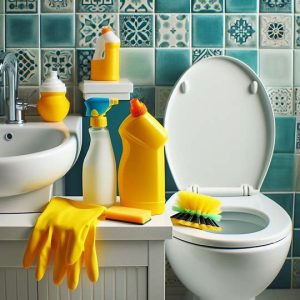
Toilet bowl cleaner, also known as toilet cleaner, toilet bowl cleaner, and toilet bowl cleaner, is a cleaning product that cleans, sterilizes, and disinfects toilet bowls.
Types of Toilet Bowl Cleaners:
Toilet bowl cleaners on the market are mainly divided into two categories: solid and liquid. Solid toilet bowl cleaners are also called toilet bowl cleaners, and liquid toilet bowl cleaners are called toilet bowl cleaners.
How to Use Toilet Bowl Cleaners:
- Solid Toilet Bowl Cleaners:
Simply put the toilet bowl cleaner in the toilet water tank. The toilet bowl cleaner will dissolve in water and clean the toilet every time you flush.
- Liquid Toilet Bowl Cleaners:
Spray the liquid toilet bowl cleaner directly on the surface of the toilet, let it stand for 5-8 minutes, then scrub it with a brush and rinse it with clean water to make it look new.
Toilet Bowl Cleaning Agents:
The main dirt on the toilet and toilet bowl are feces, scale, rust and dust deposits. Feces and dust deposits are easily washed away by water, while urine scale, scale and rust are difficult to wash away. Over time, a layer of “yellow scale” is often formed on the surface of the toilet.
- Urine scale:
Urine scale is mainly formed by the long-term contact of inorganic salts and organic matter in urine with air, and then deposited on the surface of the toilet. The main components are calcium and magnesium salts of uric acid, carbonate and phosphate.
- Scale and rust:
Scale and rust are mainly formed by the long-term flow of tap water over the surface of the toilet. The calcium, magnesium and ferrous ions in the water interact with the surface of the toilet and the air. The main components are calcium carbonate, magnesium carbonate, iron oxide and silicate.
Since these common dirt on the toilet are all insoluble salts or oxides, dissolving and removing them requires a certain degree of acidity. Therefore, common toilet cleaners often contain a certain amount of acidic ingredients.
Analysis of Toilet Bowl Cleaner Formulas:
Through the analysis of the formulas of 8 different manufacturers in the world, it can be seen that they are all water-based formulas, and at the same time acid agents, thickeners and surfactants, which are specifically described as follows.
- Acid agents:
One of organic acid and inorganic acid is used. The main inorganic acid is hydrochloric acid; the most commonly used organic acids are citric acid and lactic acid.
- Thickeners:
One of xanthan gum and fatty amine polyoxyethylene ether is used.
- Surfactants:
These include:
-
Nonionic surfactants: alkyl glycosides and fatty alcohol polyoxyethylene ethers
-
Anionic surfactants: sodium alkylbenzenesulfonate and sodium fatty alcohol polyoxyethylene ether sulfate
-
Amphoteric surfactants: amine oxides
-
Products that claim to have bactericidal properties:
These products use cationic bactericides, such as alkyldimethylbenzylammonium chloride.
- pH range of the formulation:
The pH range of the formulation is 2.0 to 3.0.
Conclusion:
(1) The raw materials used by foreign well-known brands of hard surface cleaners are mostly common raw materials.
(2) In terms of product acidity and alkalinity control, not only the formula’s decontamination or descaling performance is considered, but also the safety of the washed surface and the user.
(3) In terms of the selection of surfactants, easily degradable surfactants are used.
(4) In terms of the selection of bactericides, cationic bactericides are used, and no phenolic or other types of bactericides are found.
Precautions:
-
Many toilet bowl cleaners mainly rely on hydrochloric acid to remove limescale. Hydrochloric acid is very corrosive, so avoid contact with skin when using toilet bowl cleaner. If toilet bowl cleaner gets on your skin, rinse it off with water.
-
Since toilet bowl cleaners are generally corrosive, they should not be used on non-ceramic surfaces, such as wooden floors, cement floors, marble and aluminum products.
-
Toilet bowl cleaners cannot be used with other cleaning products. In particular, when mixed with chlorine-containing disinfectants, it will produce toxic gas.