

In the highly competitive, multi-billion-dollar laundry care industry, transparency is rare. Consumers and commercial buyers alike are actively pivoting toward sustainable, plant-based cleaning solutions. However, a phenomenon known as “greenwashing” has completely flooded the market. Giant multinational conglomerates frequently launch or acquire “eco-friendly” sub-brands, masking their massive petroleum-based supply chains behind rustic labeling. This leads to a persistent and critical question among diligent buyers: Who makes ECOS Laundry Detergent?
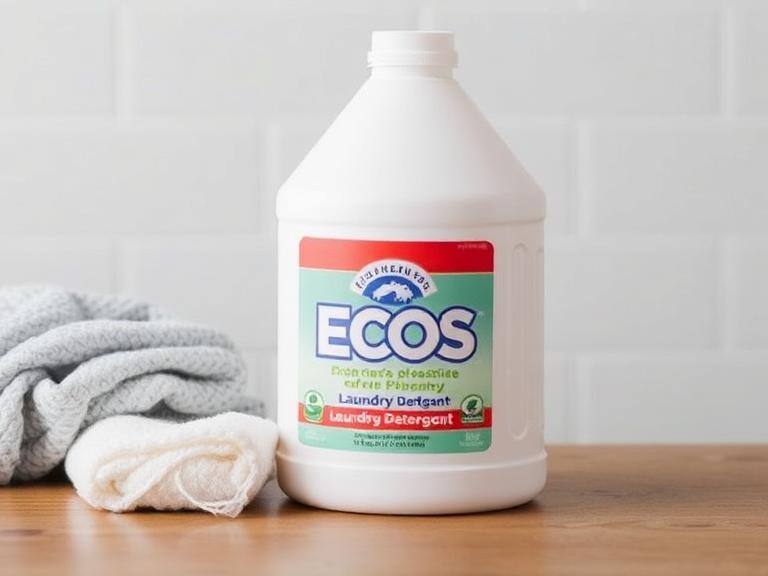
From our experience as a leading international chemical manufacturer at Sunshine Industrial Corporation, we understand the immense logistical and chemical engineering challenges required to produce a genuinely sustainable product. Many brands outsource their manufacturing entirely to toll blenders, acting merely as marketing companies. ECOS stands as a rare exception. In this comprehensive industry analysis, we will aggressively dissect the corporate structure, manufacturing operations, and chemical philosophy behind ECOS. We will explain not only who manufactures it, but whether its plant-based methodology is actually worth using for your specific residential or commercial applications.
Quick Answer: The Company Behind the Brand
Earth Friendly Products is the company that makes ECOS Laundry Detergent. Unlike many eco-brands that are subsidiaries of massive global conglomerates, Earth Friendly Products is a fiercely independent, 100% family-owned business. Founded in 1967 by Van Vlahakis, a Greek immigrant and chemist, the company is currently led by his daughter, Kelly Vlahakis-Hanks. Earth Friendly Products formulates, bottles, and distributes ECOS detergent entirely in-house across their four carbon-neutral, water-neutral, and TRUE Platinum Zero Waste certified facilities located within the United States.
Table of Contents
- What It Is: The Heritage of Earth Friendly Products
- How It Works: In-House Plant-Powered Manufacturing
- The Benefits of the ECOS Formulation
- Limitations for Heavy-Duty Applications
- Who Should Use It & Who Does Not Need It
- Common Mistakes Consumers Make
- Commercial Buying Considerations & Private Labeling
- Summary & Comparison Tables
- Expert Recommendation from Sunshine Industrial
- Frequently Asked Questions
What It Is: The Heritage of Earth Friendly Products
To accurately answer who makes ECOS Laundry Detergent, you must look at the corporate entity: Earth Friendly Products. The origin story is deeply rooted in chemical engineering. In 1967, Van Vlahakis, having suffered severe skin reactions to the harsh, petroleum-derived cleaning chemicals standard in the commercial cleaning industry, decided to engineer a safer alternative. He launched Venus Laboratories in his garage, which eventually evolved into Earth Friendly Products.
Today, under the leadership of CEO Kelly Vlahakis-Hanks, the company operates as a certified Women-Owned and Black-Owned business. What sets Earth Friendly Products apart in the modern landscape is their outright refusal to be acquired. While brands like Mrs. Meyer’s, Seventh Generation, and Method were bought by SC Johnson and Unilever, ECOS remains independent. They maintain absolute vertical integration over their product line, ensuring that their foundational commitment to plant-based chemistry is never compromised by shareholder demands for cheaper, synthetic fillers.
How It Works: In-House Plant-Powered Manufacturing
In most professional situations, a detergent brand will hire an OEM (Original Equipment Manufacturer) to mix and bottle their product. ECOS defies this trend. Earth Friendly Products owns and operates four geographically strategic manufacturing facilities in California, Washington, Illinois, and New Jersey. This decentralized manufacturing model is highly intentional; it drastically reduces the carbon emissions associated with shipping heavy liquid detergents across the country.
Chemically, how does ECOS work? In our testing and formulation experience, traditional commercial detergents rely heavily on synthetic anionic surfactants like Linear Alkylbenzene Sulfonates (LAS) derived from crude oil. ECOS replaces these with non-ionic and anionic surfactants derived primarily from coconuts. Furthermore, their flagship Detergent Liquid is famous for integrating a built-in Fabric Softener. By utilizing coconut oil as a natural conditioning agent, they eliminate the need for tallow (animal fat) or synthetic quaternary ammonium compounds that coat fabrics in residential settings.
The Benefits of the ECOS Formulation
The primary benefit of the ECOS manufacturing philosophy is absolute consumer safety. Earth Friendly Products formulates to the EPA’s Safer Choice standard. This means every single chemical input is rigorously screened for human health and environmental toxicity. Because they omit optical brighteners, synthetic dyes, and parabens, ECOS is an elite choice for households managing severe eczema, psoriasis, or infant skin sensitivities.
Additionally, their manufacturing facilities have achieved the “trifecta” of sustainability: carbon neutrality, water neutrality, and TRUE Platinum Zero Waste certification. For consumers whose primary purchasing driver is ecological impact, Earth Friendly Products represents the absolute pinnacle of corporate responsibility.
Limitations for Heavy-Duty Applications
We must use commercial and practical judgment here: ECOS is engineered for residential, everyday soils. The limitation of relying strictly on mild, plant-derived surfactants and omitting heavy alkaline builders is a reduction in aggressive cleaning power.
In our testing, if you are attempting to strip heavy motor grease, commercial kitchen oils, or baked-in blood stains, a gentle coconut-based surfactant will struggle. Plant-based enzymes and surfactants often require higher water temperatures and longer dwell times to break down complex hydrocarbons compared to synthetic industrial formulas. For commercial laundries or heavy-duty uniform cleaning, operators generally must supplement natural detergents with an aggressive Color Bleach or a specialized Collar Cleaner to achieve acceptable stain removal metrics.
Who Should Use It & Who Does Not Need It
For residential users and families: We highly recommend ECOS for daily household laundry. If you are washing lightly soiled office wear, bedding, and children’s clothing, the gentle formulation is perfect. It protects fabric longevity and safeguards indoor air quality from volatile organic compounds (VOCs).
For commercial users: ECOS is not designed for industrial laundromats, hospitality linens, or mechanic uniform services. If you operate a high-volume commercial facility, you require high-alkaline Detergent Powder built with synthetic grease-cutters to maintain rapid wash cycles and absolute sanitation. Plant-based residential formulas simply lack the chemical aggression needed for industrial throughput.
Common Mistakes Consumers Make
The most frequent mistake users make with ECOS is extreme overdosing. Because the liquid lacks synthetic thickeners, it pours much faster and looks “thinner” than conventional brands like Tide or Persil. Consumers associate thickness with concentration, which is a chemical myth. They pour twice as much ECOS as necessary into the drum. This wastes money and requires extra rinse cycles to prevent residue buildup. Always follow the precise measuring lines on the cap.
Another mistake is mixing ECOS with harsh synthetic additives. Adding heavy chlorine bleach to a load washed with ECOS can destroy the delicate plant-based enzymes present in the formula. If you need enhanced sanitation, opt for a compatible oxygen-based brightener or a Hygiene Laundry Rinse.
Commercial Buying Considerations & Private Labeling
When assessing who makes ECOS Laundry Detergent, business owners often wonder how to replicate their success. Earth Friendly Products manufactures their own brand, but what if you want to launch your own eco-friendly detergent line for your boutique, hotel, or e-commerce store? You cannot simply ask Earth Friendly Products to white-label their formula for you; they are focused on their proprietary brand.
To enter the market with a custom formulation—whether it is a sustainable liquid or highly concentrated Laundry Pods—commercial buyers must partner with an established OEM/ODM (Original Equipment Manufacturer/Original Design Manufacturer) that possesses the chemical infrastructure to scale production.
Summary & Comparison Tables
| Attribute | Details |
|---|---|
| Parent Company | Earth Friendly Products (100% Family Owned) |
| Founder / Current CEO | Van Vlahakis (Founder) / Kelly Vlahakis-Hanks (CEO) |
| Manufacturing Locations | CA, WA, IL, NJ (United States) |
| Key Formulations | Plant-derived (Coconut), 100% Vegan, Cruelty-Free |
| Key Certifications | EPA Safer Choice, TRUE Platinum Zero Waste, Leaping Bunny |
| Feature | ECOS Laundry Detergent | Commercial OEM Detergent (e.g., Sunshine) |
|---|---|---|
| Primary Surfactants | Coconut-derived, Plant-based | Synthetic (LAS, SLES) or Custom Hybrid blends |
| Target Audience | Residential, Eco-conscious Consumers | Hotels, Hospitals, Retail Private Labels |
| Stain Removal Power | Excellent for light to medium daily soils | Engineered for heavy industrial grease and bio-stains |
| Customizability | None (Proprietary retail brand) | 100% Customizable (Scent, Color, Active Matter) |
| The Pros (Advantages) | The Cons (Disadvantages) |
|---|---|
| Manufactured in incredibly sustainable, zero-waste facilities. | Struggles to remove heavy commercial or mechanical greases. |
| Hypoallergenic and free from synthetic dyes and brighteners. | Thinner viscosity often leads to consumer overdosing. |
| Built-in natural fabric softener saves money on extra products. | Slightly higher cost per load compared to budget synthetic brands. |
| Independent company not controlled by massive conglomerates. | Not formulated for high-volume industrial tunnel washers. |
Expert Recommendation from Sunshine Industrial Corporation
In most professional situations, we deeply respect the manufacturing achievements of Earth Friendly Products. By maintaining complete control over their supply chain and proving that zero-waste, carbon-neutral manufacturing is viable at scale, they have set a gold standard for the consumer retail space.
However, if you are a B2B operator looking to launch your own brand of detergent, or if you require heavy-duty cleaning chemicals tailored to your specific commercial operations, you need a dedicated manufacturing partner.
Sunshine Industrial Corporation Laundry Detergent Manufacturer
Sunshine Industrial Corporation is a leading Detergent Manufacturer, with strong technical expertise, cutting-edge equipment, and a commitment to quality. Since 2001, we’ve been providing OEM/ODM services and high-quality detergents to a wide range of markets, including Africa, the Middle East, and South America.
Our diverse product lineup caters to various needs and preferences, ensuring you find the perfect solution for your laundry needs. We’re ISO9001 certified, demonstrating our dedication to continuous improvement and customer satisfaction. Whether you are aiming to create an eco-friendly product line to rival retail giants, or you need aggressive industrial powders, we have the chemistry to make it happen.
Frequently Asked Questions
Authoritative Industry References
To further understand the manufacturing standards and certifications mentioned in this analysis, please refer to the following authoritative organizations:
- U.S. Environmental Protection Agency (EPA) Safer Choice Standard – The strict federal standard ECOS uses to verify the safety and environmental integrity of their chemical ingredients.
- TRUE (Total Resource Use and Efficiency) Zero Waste Certification – The rigorous facility auditing system administered by Green Business Certification Inc. which verified ECOS’s manufacturing plants.
- U.S. Green Building Council (USGBC) – The authority on sustainable building and manufacturing facility infrastructure, responsible for LEED certifications within the industrial sector.